One Race Changes Me
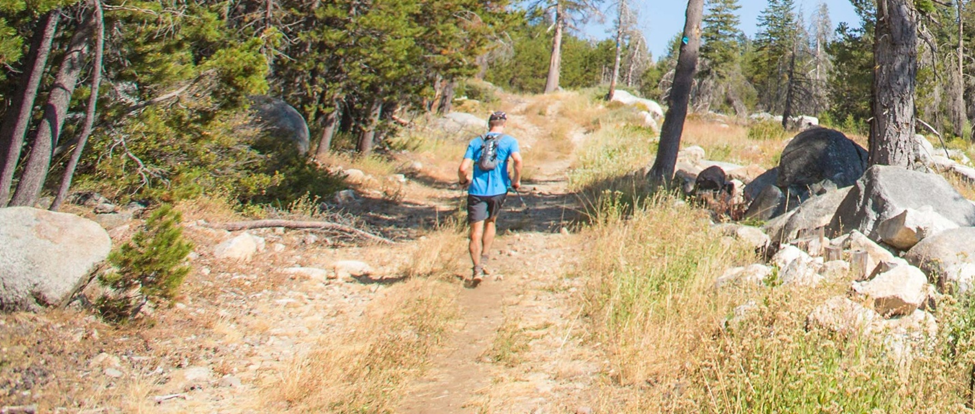
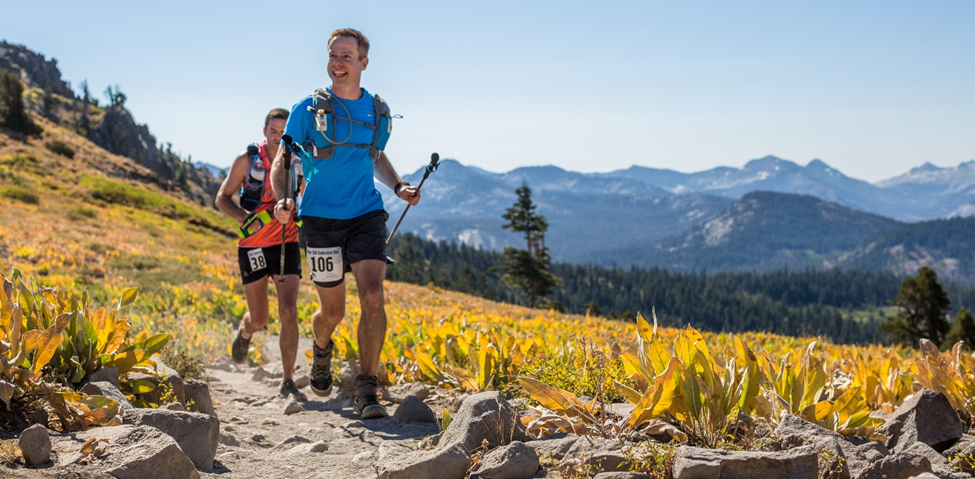
In 2016 I ran the Tahoe 200, a 205-mile trail race that passed through the mountains and meadows of California and Nevada. The route circled the entirety of Lake Tahoe, picking up 35,000 feet of cumulative elevation gain through the Sierra Nevada Mountains along the way. This would be my second 200-miler. My first had been in 2015 at the inaugural Bigfoot 200.
It is difficult to overstate the impact Tahoe had on me. That single race completely reframed my perception of what I was capable of. I have been running since 1989, and, even now, writing this race recap ten years later in 2026, I believe the most significant turning point in my 37 years of running was Tahoe 200 in 2016.
Training
When I signed up for Tahoe in December of 2015, I was living in Colorado, but I was flying to southern California every week for work. Throughout the entire period I was preparing for Tahoe, I averaged four or five days a week of training in California. There were plenty of roads to run on near my hotel in Ontario, but the Claremont Hills Wilderness Park (CHWP) was my closest access to good hills and trails. It became my default training area when I didn’t feel like making one of the longer drives to Mount Baldy, the San Dimas Truck Trail, Icehouse Canyon, and others. CHWP was my steady go-to for hills in California, and this would play into my race in a more specific way than I could have imagined.
My training was more refined and focused in 2016 as compared to the three previous years I had been running ultras. I had begun digging into articles on endurance training theory and practice, and I did my best to apply a number of those theories to my own training. Additionally, my volume of running increased. In 2015, in preparation for the Bigfoot 200, I ran one 70-mile peak week during the training cycle, and all my other weeks were 60 miles or less. In contrast, my 2016 training included 10 weeks with mileage in the low to mid-80s. Volume alone is not always a driver of performance, but it can help. And if nothing else, it served to cement in my mind the idea that I was approaching this year’s training with additional knowledge and additional vigor.
The Race
I slept well the night before the race, as I had always done before my races. Two-hundred miles is a long way to travel on foot, but I had done it before, so the distance didn’t inherently give me anxiety. I simply went to bed, slept easily, and woke up in the morning ready for a run. My pattern of easy slumber changed completely in 2017, but that is a story for another day. In 2016, there was no pressure. No one expected anything of me and, more importantly, I expected nothing of myself other than delivering on my personal commitment to push my body as well and as hard as I could. I was simply another runner in another race.
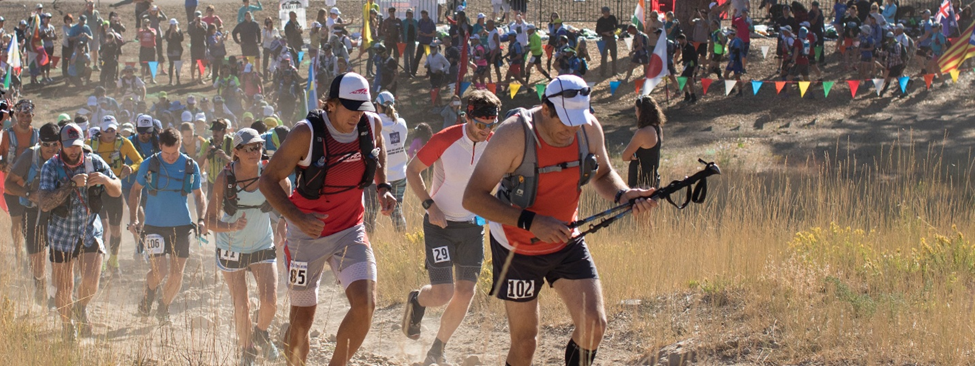
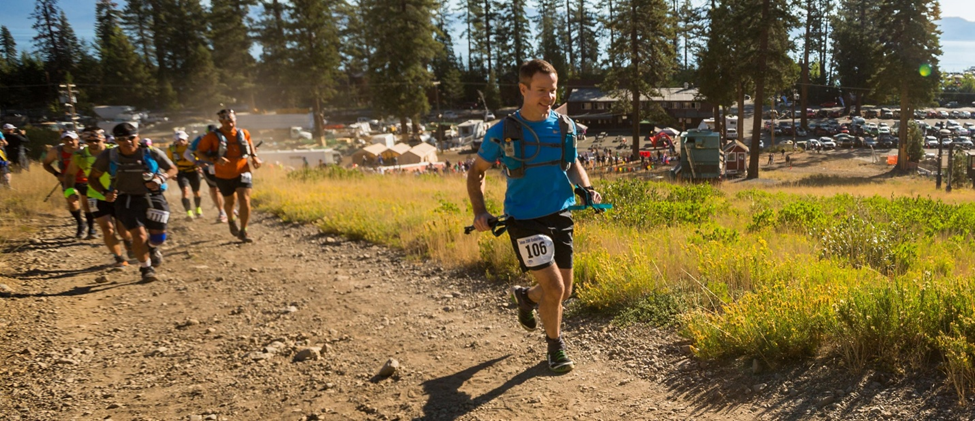
On the morning of Friday, September 16, just over 100 of us were clustered at the base of a ski slope in Homewood, California. A few minutes before 9 AM we collectively edged closer to the start line. We could see only a short section of the course, maybe a tenth of a mile, as it began its zig-zagging route up the ski slope.
Having completed only one 200-miler prior to this, I was not yet confident that I truly knew how to pace myself at the start, but I knew enough to not worry about the other runners. Instead, my plan was to establish my own pace by feel, keeping my intensity at a reasonably low level, only pushing myself harder when I felt strong. The splits I had charted before the race were solely intended to give my crew a rough idea when I might be arriving at the aid stations, and to help me plan what would go in my drop bags.
Much of the first section was a climb. I did a lot of hiking during that first ascent, and I only ran when it made sense. Those first 8 miles went by quickly as I conversed with the runners around me. My crew, which consisted of two friends who were kind enough to join me from Colorado, re-stocked my supplies at Barker Pass aid station, and then I was moving again a few minutes later.
At mile 18 I came to the Rubicon aid station, where it seemed like an entire swarm of bees was buzzing around the food tables as if the snacks had been laid out just for them. I felt sorry for the volunteers who were stuck in the middle of the bee frenzy, but the desire to avoid being stung certainly motivated me to get through the aid station quickly. Four minutes later, I was on my way, making that my fastest aid station stop of the race. Now that I think about it, maybe for my future races I should arm my wife with a jar of bees. If I’m taking too long at an aid station she could shake the jar and then open the lid. I’d be out of that aid station in a heartbeat!
After departing the aid station, I was onto the famous Rubicon jeep trail as the course skirted Desolation Wilderness. The 4 x 4 vehicles crawling through this area had chewed the dirt and rock to a fine powder that was bad enough to run through, but when it was kicked up by the passing jeeps, it made breathing a major chore. Fortunately, most of the drivers would stop or at least slow down as we crossed paths. As a whole, the section was more runnable than I had expected, and I beat my forecasted time for the section by 30 minutes.
Dehydration
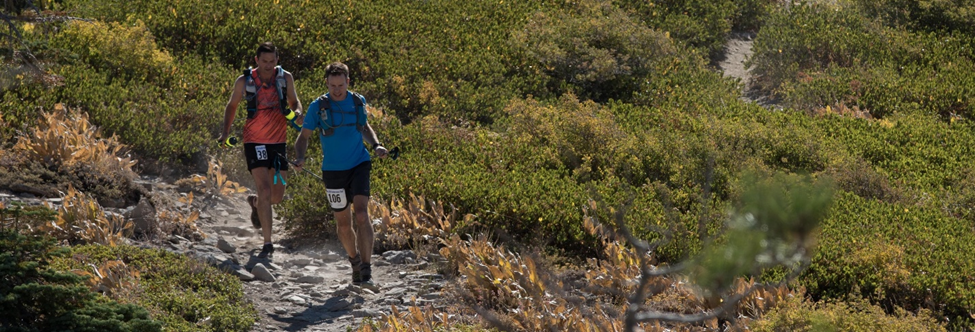
Shortly before I arrived at Tell’s Creek aid station, mile 30, I was starting to feel the effects of the day’s heat, but I was excited that I seemed to be somewhere near the front of the pack. In 2016, I had not yet learned how to ensure I was consuming the right amount of fluids and electrolytes. Additionally, I didn’t have enough experience to recognize the early signs of dehydration. As a result, I breezed through the aid station in a few minutes without taking the time to get my nutrition back into balance. I paid for that mistake halfway through the 14-mile section from Tell’s Creek to Wright’s Lake. My energy level started sinking, and I was no longer able to sustain even the moderate level of intensity I had been maintaining up to that point. Six runners passed me before I saw the writing on the wall. I needed to either take the time to fix myself, or risk continuing down this negative spiral.
I spent forty minutes at Wright’s Lake aid station trying to correct my flagging energy. The volunteers were effusively kind to me even when I was asking for my seventh or eighth cup of ginger ale. Surprisingly, despite the amount of time I spent at Wright’s Lake, only one runner passed me while I sat at the aid station. This put me in 11th place, although I was unaware of my position at the time.
When I finally got moving again, I felt stronger from all the fluids I’d consumed, but the unsettled feeling in my stomach had not entirely gone away. In retrospect, I should have taken some sodium with the ginger ale, but at that point in my racing “career” I just hadn’t learned all the lessons I needed to learn. Although the stomach issues were relatively minor at this point, they were making it difficult for me to consume enough calories as I ran. All three elements of race nutrition (fluid, electrolytes and calories) are intertwined, and when one of them is out of balance it can affect both performance and attitude.
Changing Nutrition
By the mile 63 aid station, Sierra-at-Tahoe, I knew I had to shift away from the energy bars and chews I had been relying on for calories. I had been unable to consume them for the last several hours. As an alternate source of calories, my crew stocked my pack with fruit and red potatoes, since I could usually eat those no matter how poorly I was feeling. In total, I spent over an hour at the aid station getting food and fluids into my body as I attempted to recover from the rigors of the first day. I left the aid station around 2:30 AM Saturday morning.
Three aid stations and 40-miles later, I was feeling a bit better. I had even managed to pass a few runners along the way. The potatoes and fruit were still going down reasonably well, so my crew filled my pack with more of the same at Heavenly aid station, mile 103. It was 2:40 PM, almost 30 hours into the race. I hadn’t yet slept. It was a hot afternoon, and the sun was beating down on me through the thin canopy of tree branches. After 3 or 4 miles, I found myself sleepy and worn out as I passed through a lightly treed area that I would soon learn was the beginning of the ascent up to Spooner Summit. I spotted a large boulder just off the side of the trail, and a soft-looking patch of dirt beside it. I couldn’t resist the allure of the soft dirt and the boulder’s cool shade, so I decided to try taking a trail nap to see if it would refresh me. I stripped off my hydration pack to use as a pillow and curled up on the ground beside the boulder.
It felt for a moment as if I had found the most comfortable patch of dirt on the entire planet. I closed my eyes with hopes of drifting into a sweet slumber when, just a minute or two later, I heard a runner move past me on the trail. I briefly considered remaining in my comfortable little spot of earth. Then my sense of competitiveness kicked in. I couldn’t just let this runner pass me after spending the last several hours trying to regain some of the ground I’d lost the previous day.
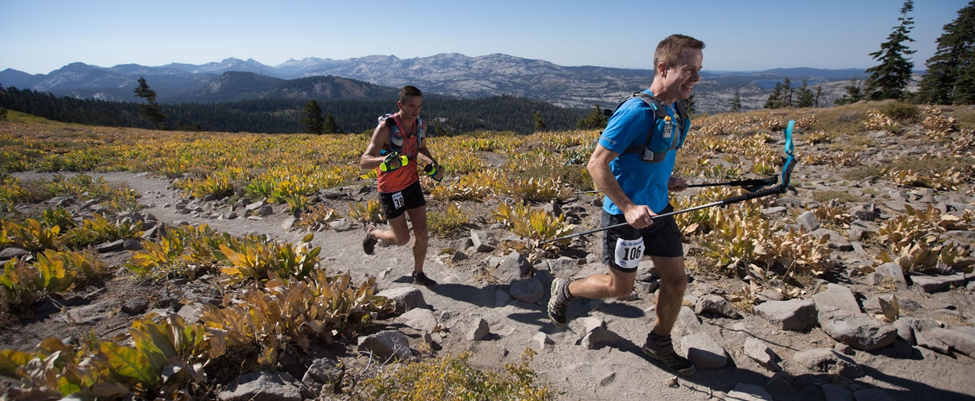
I stood up, slung my pack across my shoulders, and started hiking up the ascent. With a little effort, I quickly caught up to the runner, Mike Hewitt. Then, for the next 8 or 9 miles, I paced myself off Mike, occasionally getting separated from him, but generally keeping him close or at least within sight. I was struggling. I was still sleepy, and I still wasn’t consuming enough calories even though I was trying. But, by focusing on Mike and committing myself to keeping whatever pace he was moving, I managed to get to the top of the 9-mile ascent in a reasonable time.
Back in the Game
With roughly 6 miles of mostly downhill trail remaining to Spooner Summit aid station, I stopped to water the local flora as Mike continued on. Afterward, I pulled out a bag of fruit and began eating. Remarkably, the fruit went down easily. I felt as if I needed to get as many calories into my body as possible, so I just stood there looking at the gentle, downward slope of the hill I was standing on. When I had eaten as much as I could, I tucked the bag back into my pack.
Then I started jogging at an easy pace down the hill. It didn’t take long before the calories started hitting me, possibly because my stomach had been so empty. I sped up my pace as I felt stronger, and by the time I passed Mike I was running at a fast clip. Mike jumped onto my coattails just as readily as I had jumped on his a couple hours earlier to get up the mountain.
I was riding a high. While I would learn a few years later how to keep my body in better balance to avoid the struggles of going from physical highs to troughs, for now, after such a long low, it felt fantastic to be riding this amazing wave of positivity and energy.
I had gone from hiding from the sun under a boulder to rocketing down the trail like a champion. No one was going to get in my way. The rational part of my mind advised my body to slow down, but I ignored rationality, and instead rolled the dice on emotion.
I kept pushing. There were a few uphill sections during the last miles to Spooner Summit, but even on the ascents I kept driving hard. Mike was somewhere close behind me. I could hear his movements as he paced himself against my surge.
I arrived at Spooner Summit aid station, mile 124, at 8:30 PM on Saturday. The sun had already set. To my crew, I verbalized my concerns regarding possibly having just destroyed my quads during my downhill charge. But I shared my misgivings as an acknowledgement of possible repercussions later in the race rather than because I thought I might have made a mistake. Because, deep inside me, I felt my crazy 5-mile assault to the aid station was the best thing I had done in the race so far.
Continuing the Push
Fifteen minutes after arriving at Spooner, I was back on the course.
Mike had departed the aid station a few minutes ahead of me, but he hadn’t made it far along the trail before I passed him and the pacer he had picked up. Somewhere in my mind I knew that by passing Mike I was now in fifth place, but I had no idea how many runners might be pressing me from close behind. And I really didn’t even think about the person in front of me being someone I could catch. It wasn’t as if I thought I was incapable of catching someone else, it was simply that my mind didn’t even think about Tahoe 200 in that context. I just kept running. I wasn’t a “competitor,” I was just another runner.
Fourteen miles after Spooner Summit aid station, I turned off the trail and onto the dirt road that would drop me the rest of the way down to the Tunnel Creek aid station. I hadn’t looked at my mapping app in a while, so I kept hoping Tunnel Creek was just ahead. To my dismay, this road section felt significantly longer than I wanted it to be even though it was only 3 miles. I was relieved when I finally saw the aid station lights just past a wooden residential fence.
At Bigfoot 200 in 2015, I learned that laying down when I wasn’t completely sleep deprived was a waste of time. As part of my analysis after that race, I concluded I could probably get away with a single sleep session at an aid station somewhere around the 40-hour mark as long as I supplemented it with a couple 10-minute trail naps when they were truly needed. So, my plan from the start was to sleep for 90 minutes when I hit the Tunnel Creek aid station at mile 140. The splits in my plan had me arriving at Tunnel Creek at 2 AM, 41 hours into the race. Somewhat surprisingly, I actually arrived within 10 minutes of that target at 1:50 AM.
Sleep
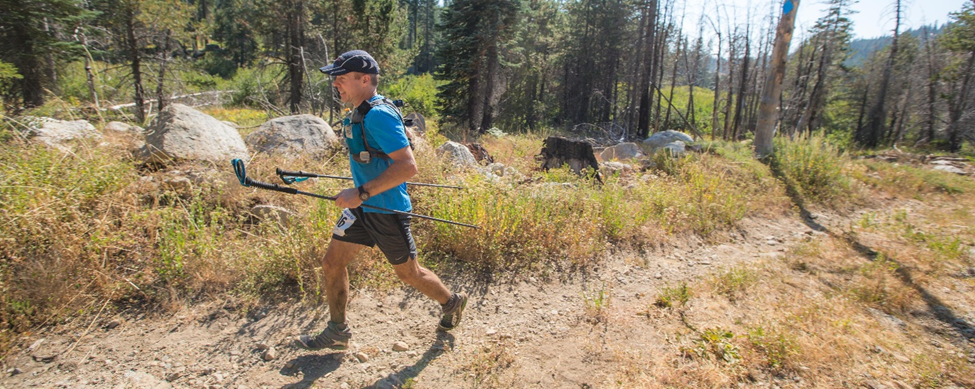
I ate some food as soon as I sat down at the Tunnel Creek aid station, and then I crawled into the back of my crew’s SUV to sleep. Thirty minutes later I was still awake. Giving up on the truck, I switched to a cot in one of the sleep tents, and immediately passed out for the next 90 minutes. When my crew woke me up, I ate a little more food, put on my gear, and then made my way to the road that would take me through Incline Village to the infamous Powerline climb.
In total, I spent just short of three hours at Tunnel Creek. During that time, two runners, Mike Hewitt and Roxanne Woodhouse, had come and gone. There was a third runner who had departed 3 hours before me. Tom Flummerfelt. He had been leaving Tunnel Creek around the same time I was arriving. At the time, I had been focused on getting food from the aid station, so I didn’t give any real thought to him. He was just another runner.
I ended up passing Roxanne just before the next aid station, Brockway Summit. I tried to do a better job managing my time at Brockway, and I was moving again within fifteen minutes. This was a fairly good time for me compared to a few of my earlier aid station stops when I wasn’t feeling well. I passed Mike and his pacer somewhere near the halfway mark of the 20-mile section to Bridgetender aid station at Tahoe City.
A Definitive Moment
The route to Bridgetender ends with a 5-mile descent from Cinder Cone to the Truckee River. As I began this descent, I started getting anxious for the aid station just as I had with Tunnel Creek. I don’t typically focus on mileage progress between aid stations, but my eagerness to get to Bridgetender was getting the best of me. My crew was charging my Garmin in the truck, so I was reliant upon the course GPX that I’d loaded into a mapping app on my phone. I pulled my phone out of my pack multiple times during the first couple miles of the descent, and each time I was disappointed by my icon’s miniscule progress on the map. I finally forced myself to put the phone in my pack and not touch it again before the aid station.
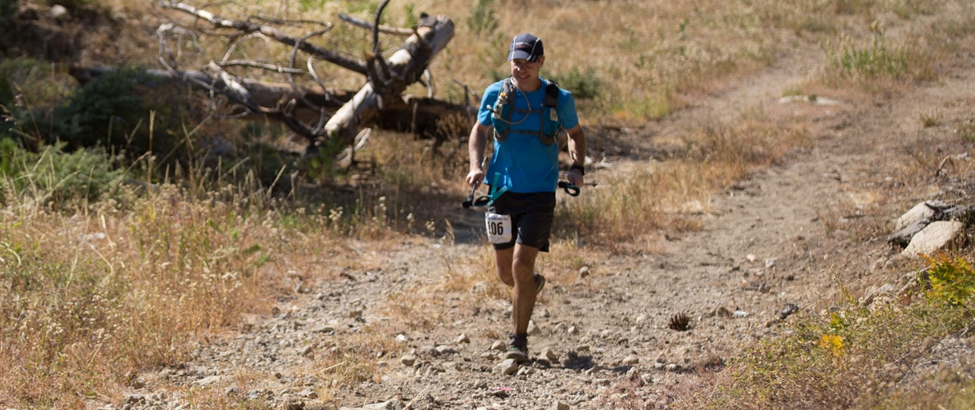
It was shortly after I tucked my phone away for good when movement around a corner ahead of me caught my eye. I was stunned. It was the runner who had departed Tunnel Creek as I arrived. Tom Flummerfelt. He was about to make a turn to the right, and he glanced back at me as I closed the short distance between us. We greeted each other as I passed, and then I pulled away, keeping my pace strong, unwilling to yield what I had just gained. The surprise of seeing Tom was still sinking in as the gap between us widened.
From a dispassionate perspective, there is nothing different or more significant when the 5th place runner passes the person in 4th place as compared to the 95th runner passing the 94th runner. But for me, in that moment, it was a world of difference. I had never viewed myself as an “almost on the podium” runner. And somehow, in my mind at least, 4th place felt significantly closer to the podium than 5th place had felt. For someone who never considered the possibility of being among the runners in the front of the pack, I found it hard to fathom that here I was. And it was exciting.
I hit Bridgetender, mile 176, at 2:15 PM Sunday. Tom arrived about 15 minutes behind me. I didn’t know how far back Mike was, but he hadn’t yet gotten to the aid station by the time I left.
From the time I left Bridgetender, I felt like I was being chased. I arrived at the final aid station a little before 7 PM. I had no idea how far behind me Tom and Mike were, but I feared they were close and drawing closer. All that remained was the 15-mile push to the finish. Departing the aid station, I knew the final miles started with a flat, paved road section before transitioning to a 2900-foot climb up to Barker Pass. It ended with a descent to the finish line at the Homewood ski resort where we had started.
I’d only gone about a half-mile up the major ascent when I realized this felt exactly like I was running the dirt road loop through the Claremont Hills Wilderness Park in southern California where I had spent so much time training. The grade and the smooth surface of the Claremont loop matched what I was doing on much of this ascent. I hadn’t run at Claremont because it was part of a grand plan of mine to mimic the late course conditions. The park had merely been a convenient drive from where I spent my working hours when I flew there from Colorado every week. I had done that 5-mile loop at least 100 times during my training leading up to Tahoe. This is what I trained for, I told myself as I climbed up toward Barker Pass. I can do this because I’ve done it so many times already. This is just another day at Clarmont. I truly could not have planned better training for this section if I had tried. The familiarity of the terrain bred confidence that translated into strength and resolve to push myself hard.
I moved through the final 15 miles of the race faster than I had run any section in the last 120 miles. I was excited and I felt emotionally and physically strong. Everything I had to give was left out there in that final section. I had nothing more to offer.
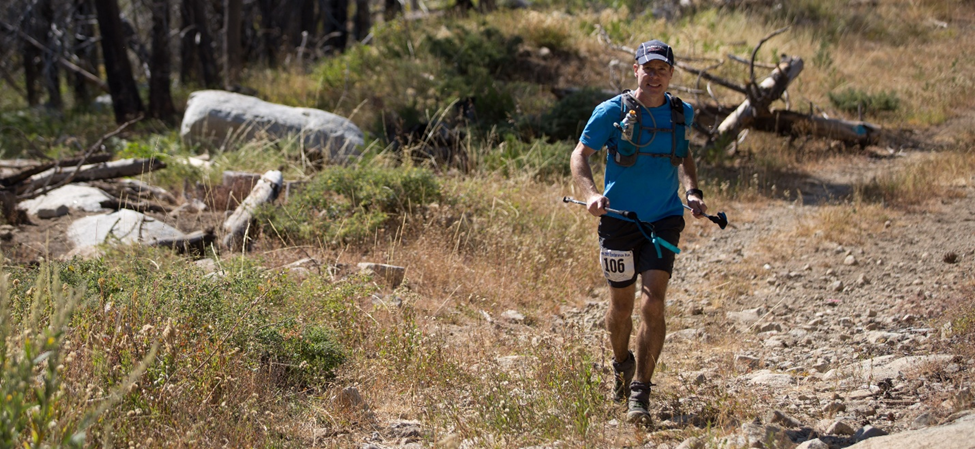
I descended the ski slope to finish in fourth place with a time of 62 hours, 8 minutes and 21 seconds.
Epilogue
All of the 200-mile races I’ve run have special moments I will always remember. At Tahoe in 2016, there were three such moments.
First was near the top of Spooner Summit when a bag of fruit resurrected me from the dead. The glorious descent to Spooner that followed will always remind me of what I can do with a few calories and a positive attitude.
The second such moment was during the race’s final ascent, when I found confidence in the similarity of the terrain to the park in which I had done so much of my training. When I might have otherwise found excuses to take my foot off the gas pedal and risk losing my position against my pursuers, instead I found the strength to push hard all the way to the finish.
The third moment is the one that reframed my perception of myself and thereby changed my trajectory within the field of long-distance trail running. It was the moment on the singletrack trail descent towards Bridgetender thirty miles from the finish when I saw the runner ahead of me and I knew I was about to pass him to seize 4th place. That was the moment that will always stay with me. It was the moment I realized I could be a competitor. In the end, these are nothing more than races, merely a hobby for most of us. Unless you are earning your living by racing, first place is really no better than last place. But within this hobby, I had gained confidence and belief in myself.
From there I redoubled my efforts to learn the best methods for training for such long races, and I started to bring a degree of focus to my training that had not previously existed. While my planning for Tahoe had been adequate, over the next several years I would develop a planning methodology that gave me an edge I did not have at Tahoe. Now, ten years after my first Tahoe 200, I continue to learn, and I continue to refine my training and race preparation based upon my growing base of experiences. I may not always be a competitor, but I will do my best to always push myself to my limits and to help others grow along the way.